
The first Stereo-Electroencephalography (SEEG) procedure was successfully performed as part of the advanced evaluation of a patient with drug-resistant epilepsy. SEEG is a minimally invasive technique used for precise identification and localization of the epileptogenic zone in patients being evaluated for epilepsy surgery.
The procedure involved the stereotactic implantation of multiple intracranial depth electrodes through small cranial trajectories to record electrical activity directly from carefully selected regions of the brain. The electrode trajectories were planned to sample relevant cortical and deep brain structures involved in the suspected seizure network.
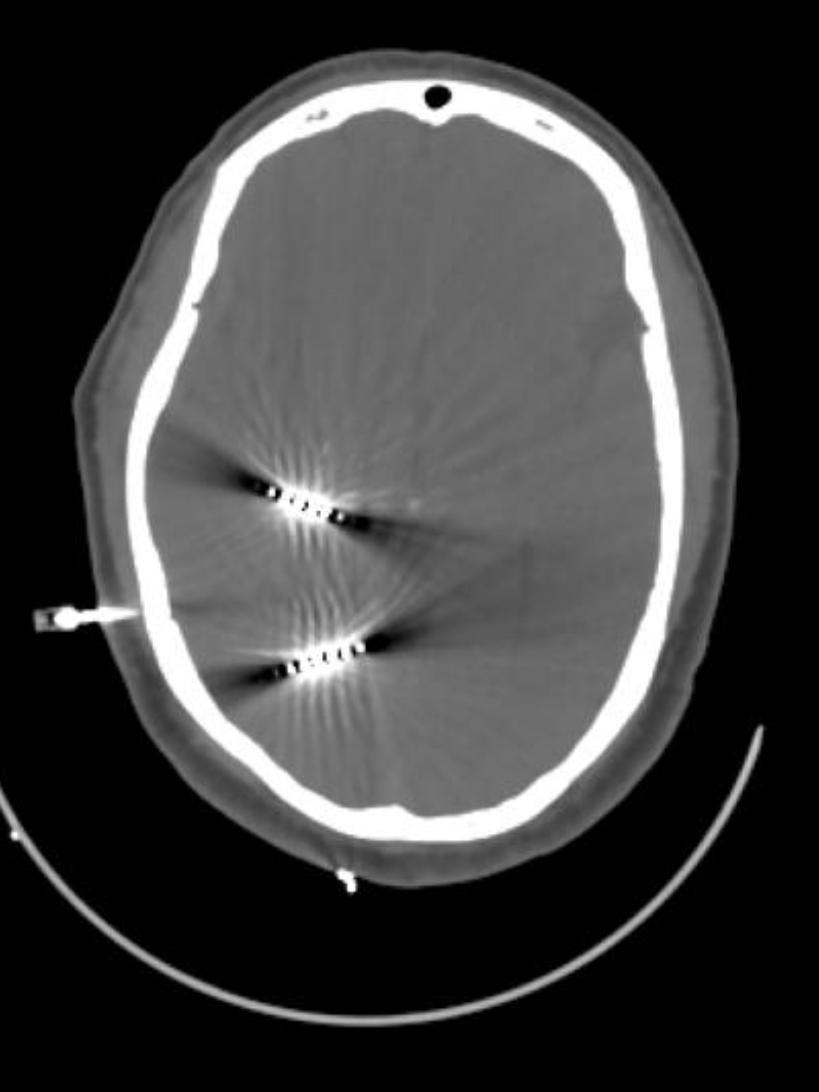
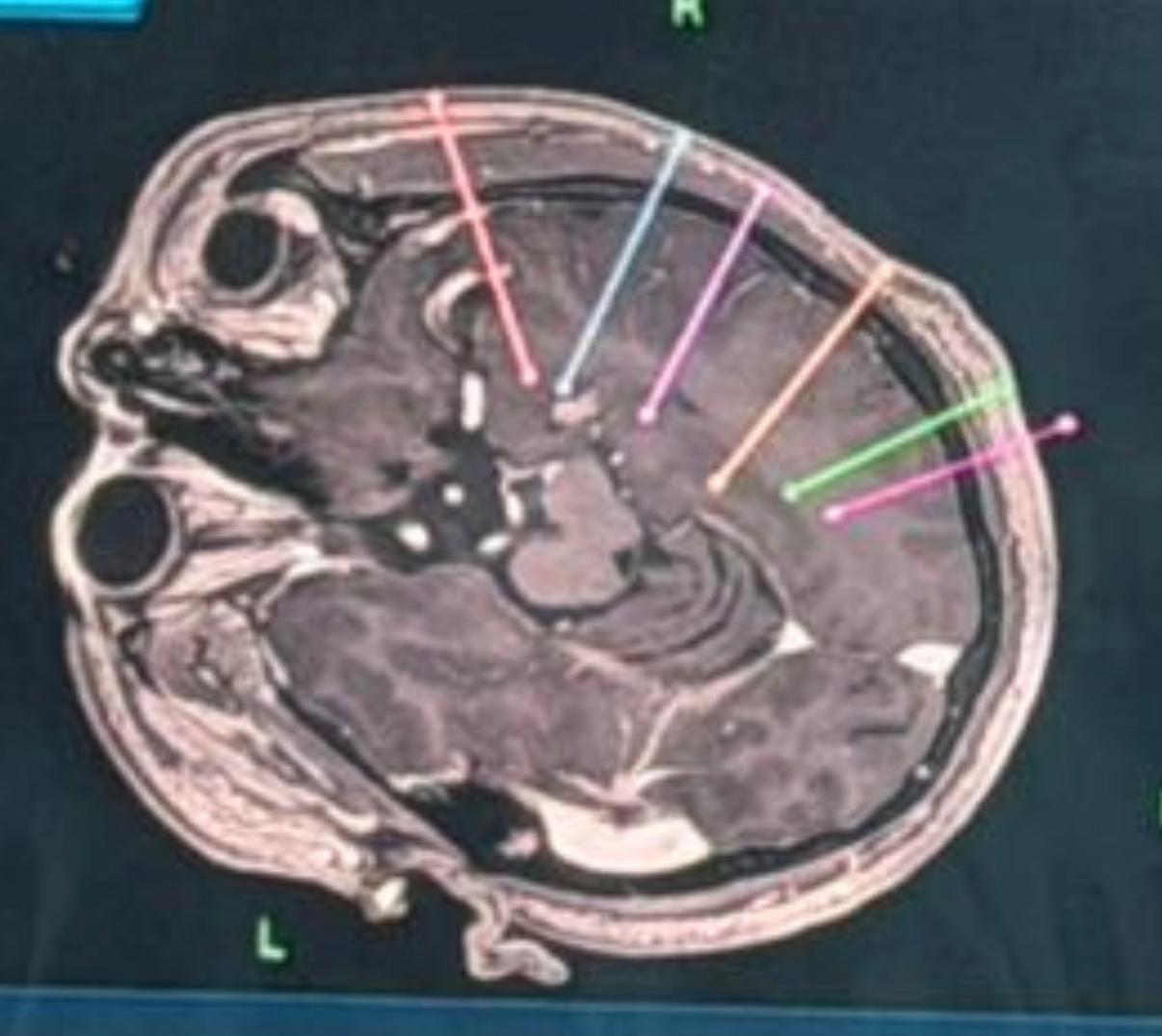
The images demonstrate the stereotactic placement of multiple depth electrodes within the brain, with the trajectories shown on MRI-based planning images. The postoperative CT image confirms the appropriate intracranial positioning of the implanted electrodes and demonstrates the electrode contacts along the planned trajectories.
SEEG provides high-resolution recordings of seizure onset and propagation, allowing the epilepsy team to correlate electrical activity with clinical seizure semiology and neuroimaging findings. This information is particularly valuable when scalp EEG and conventional investigations are unable to clearly define the seizure-onset zone.
The successful completion of the first SEEG procedure represents an important advancement in the institution’s comprehensive epilepsy surgery programme, enabling sophisticated invasive monitoring and facilitating individualized surgical decision-making for patients with complex drug-resistant epilepsy.
Short version for a hospital/event report
The first Stereo-Electroencephalography (SEEG) procedure was successfully performed for advanced presurgical evaluation of drug-resistant epilepsy. Multiple stereotactically implanted intracranial depth electrodes were strategically placed to record electrical activity from suspected epileptogenic regions. Post-procedure imaging confirmed the planned electrode trajectories and intracranial placement. SEEG enables precise localization of seizure onset and propagation and represents a significant advancement in the institution’s epilepsy surgery programme.
FIND US
LOCATE US
⌖
Narayana Medical College & Hospital
Chinthareddypalem,
Nellore – 524003,
Andhra Pradesh, India.